
The Hidden ROI of Packaging: Why You Need to Design Your System Before Your Box
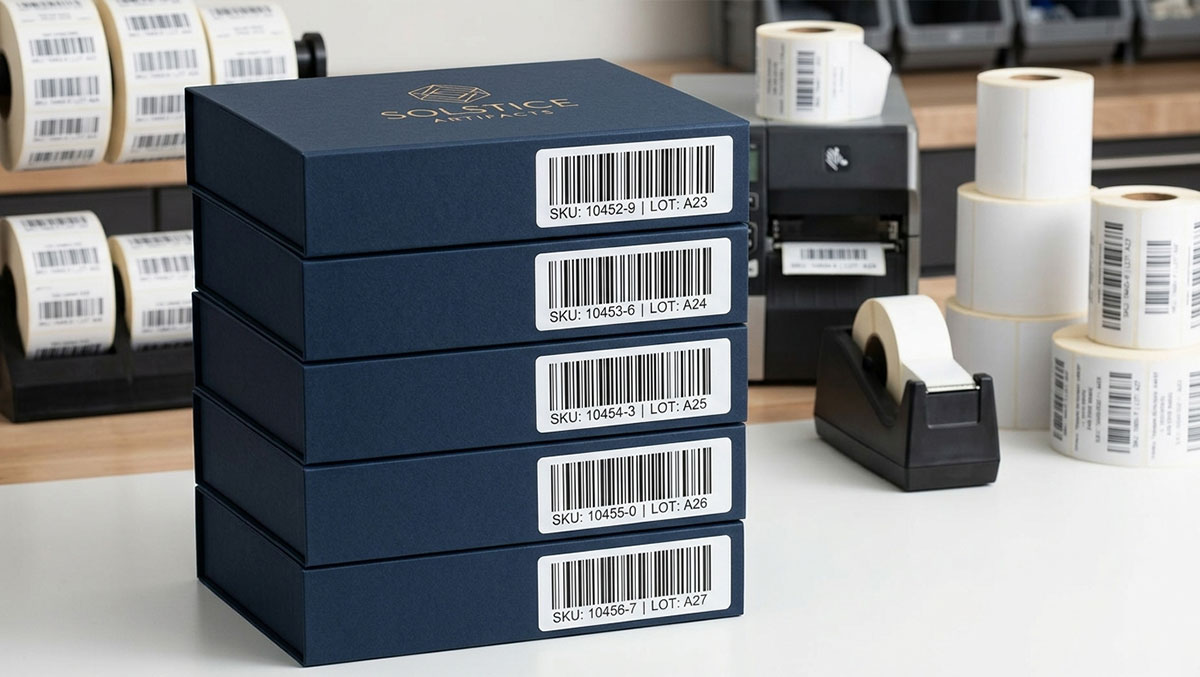
In the world of product development, it’s easy to get swept up in the aesthetics. A graphic designer hands you a gorgeous, full-color mockup of a product box. It looks sleek. It feels premium. It aligns perfectly with the brand.
But if you greenlight that single box design without mapping out your entire inventory and logistics chain first, you might be walking straight into a high-cost trap.
Packaging isn't just a container for your product; it’s a variable business system. When done right, utilizing a smart labeling strategy allows you to maintain clean, premium aesthetics while protecting your bottom line. When done wrong? You end up paying to ship air, frustrating your retail partners, or plastering ugly, mismatched stickers over an expensive box just to keep up with regulatory changes.
Here is why it pays to plan your packaging system before you start designing.
The SKU Explosion: Why Printing 27 Different Boxes is a Bad Idea
To understand the power of a variable packaging system, look at the footwear industry.
Let's say a product team launches a new sneaker model. It’s available in three different colorways and nine different sizes. Mathematically, that is 27 unique Stock Keeping Units (SKUs).
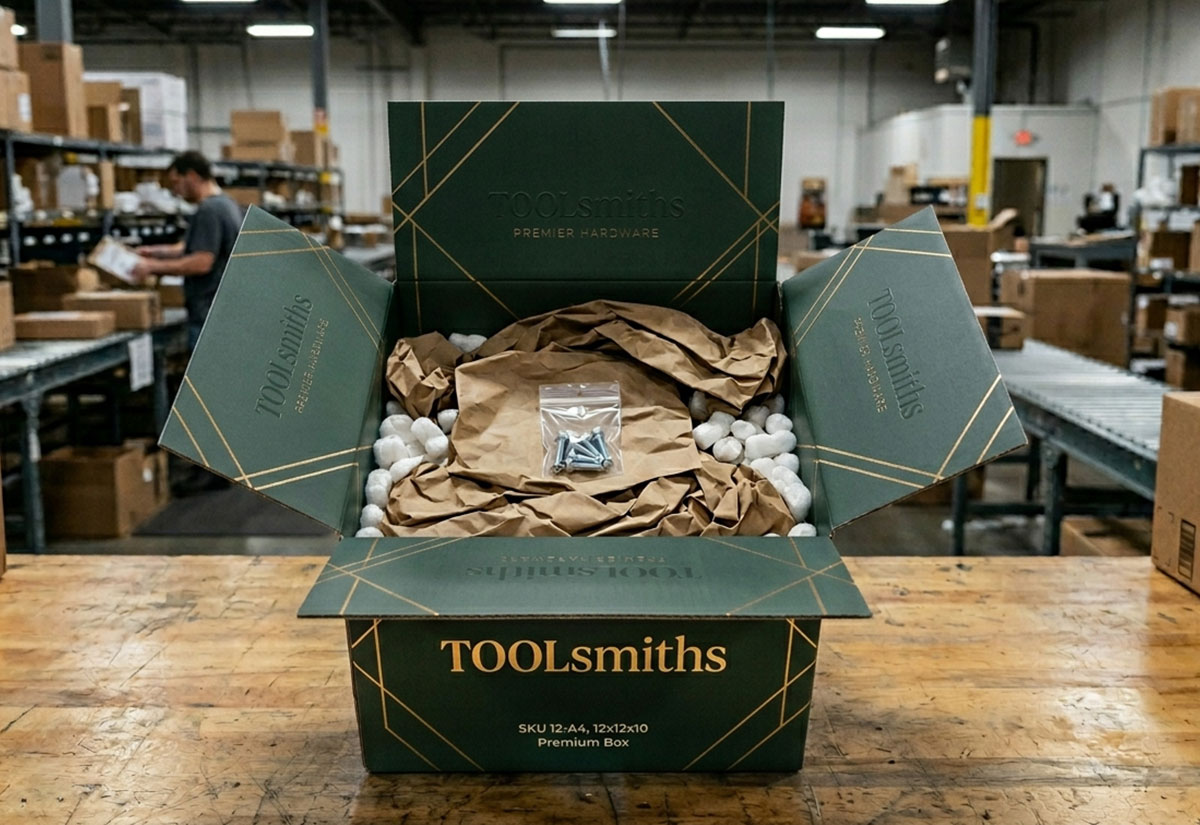
If you design a complete, fully printed custom box for every single variation, you face a logistical nightmare. You will be forced to order complex, low-quantity packaging runs for the less popular sizes and colors. To make those small, fragmented print runs financially viable, you'll naturally be motivated to cut corners, settling for lower-cost, flimsy materials just to keep the unit economics afloat.
Most seasoned product managers and designers agree there is a more pragmatic way to solve this: Print one single, premium master box, and use 27 different labels to differentiate the individual SKUs. By consolidating your packaging footprint, you can buy that single master box in massive, bulk quantities. This volume driving down your unit cost, allowing you to invest in a much higher quality, sturdier box material. Your boss will love the cost efficiency, your brand stays premium, and you have built a scalable system.
But before you celebrate, remember: a great labeling system solves one problem, but it can introduce others if you don't look at the bigger picture.
The Danger of Shipping "Sailboat Fuel"
The moment you standardize your packaging, you run into the classic tension between design and operations.
If your master box is built to accommodate your "Extra Large" accessory, what happens when you use that same box for the "Extra Small" model? A pure graphic designer might look at the shelf and say, "The uniform design looks incredibly clean. Postage rates are the shipping manager's problem."
Meanwhile, a business-minded marketer looks at the freight invoices and realizes you are paying to ship a massive amount of air—or what logistics folks call "sailboat fuel."
If dimensional weight fees are eating away all the profit margin you saved by standardizing the box, your system is broken. In this case, the pragmatic compromise might be stocking two or three different master box sizes, adding the correct size to the bill of materials based on weight and volume. Your inventory manager might initially grumble at the thought of tracking three boxes instead of one, but when they look at the big picture of halved logistics costs, they will be your biggest supporter.
Solving the Visual and Compatibility Riddle
Standardizing your boxes means relying on labels to do the heavy lifting for consumer identification. If a warehouse manager or a retail customer has to read fine print on 27 identical boxes to figure out which one is the "Midnight Blue" sneaker, you’ve built a frustrating user experience.
The immediate impulse is to put a large color swatch or high-res photo on the label. But what if you are constrained to grayscale or thermal printing at the factory?
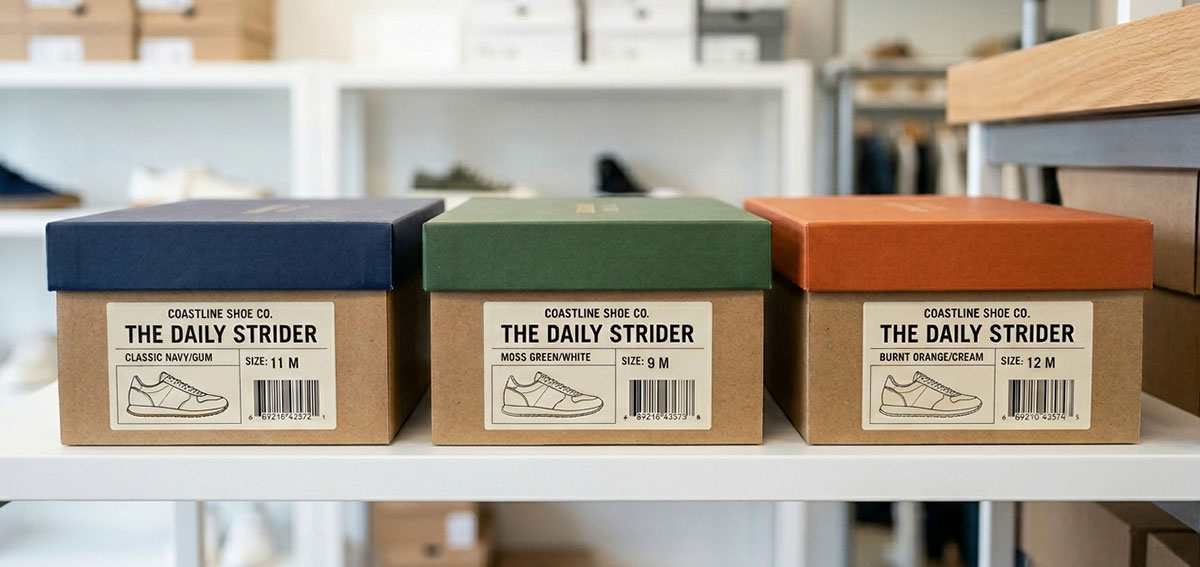
This is where a hybrid design system saves the day. Instead of forcing labels to do everything, divide the variables between the package structural elements:
- The Standardized Base: Use a high-volume, single-color box bottom across the entire line (e.g., a standard brown or black bottom).
- The Variable Component: If you have three distinct colorways, use a cheap, high-volume flood-coating process to create three different colored box lids using exact Pantone colors. Flood coating is incredibly cost-efficient compared to high-detail printing.
- The Label System: Now, you have a highly visual, clean system where the lid instantly communicates the color family. The label steps in to handle the granular details like size and UPC.
Note for retail brands: It’s tempting to think that because the box lid handles the color variation, you only need 9 generic size labels. This might fly in direct-to-consumer (DTC) e-commerce, but in retail, every configuration needs its own UPC. You will still need 27 unique labels. Keep them monochrome to save on print costs, but include the color name textually on the label to future-proof your inventory tracking.
This visual shorthand works incredibly well for compatibility mapping, too. If you manufacture aftermarket truck accessories, giving your labels a distinct color stripe—black for Ram, blue for Ford, gold for Chevy—allows a truck owner to lock eyes with the correct product instantly, entirely ignoring the rest of the shelf.
Future-Proofing and Consolidating
We have all seen businesses try to implement a labeling system mid-stream, resulting in a premium product arriving in a generic white box covered in cheap, crooked, inconsistent stickers. It looks amateurish.
When you plan out your system ahead of time, you can standardize your label die sizes and placement zones so that everything looks intentional, organized, and professional.
Planning ahead also lets you consolidate compliance. If your product line requires a California Prop 65 warning or a lithium coin-cell battery notice, don't slap those on as separate, secondary stickers. Incorporate them directly into your master label template. If your compliance looks like an afterthought, consumers will naturally wonder if the quality of your actual product was an afterthought, too.
Think Like an E-Commerce Manager
If you are struggling to map out your physical packaging variables, think of it like an e-commerce catalog.
How does a digital manager build a variable product page? The parent product name or overarching product family represents your master packaging design. The dropdown menus—the swatches for size, color, or fitment—are the exact data points that belong on your individual SKU labels.
Of course, if your business is manufacturing 50,000 units of a single, unvarying SKU, you can bypass the complexity of labels entirely. Focus your budget on getting all the data printed directly onto the master package.
But if you are managing a living, breathing product line with multiple styles, sizes, and compatibility needs, don't just design a box. Design a system. Identify your key variables early, map your shipping volumes, and let a clean, standardized labeling strategy do the heavy lifting for your brand—and your bottom line.